



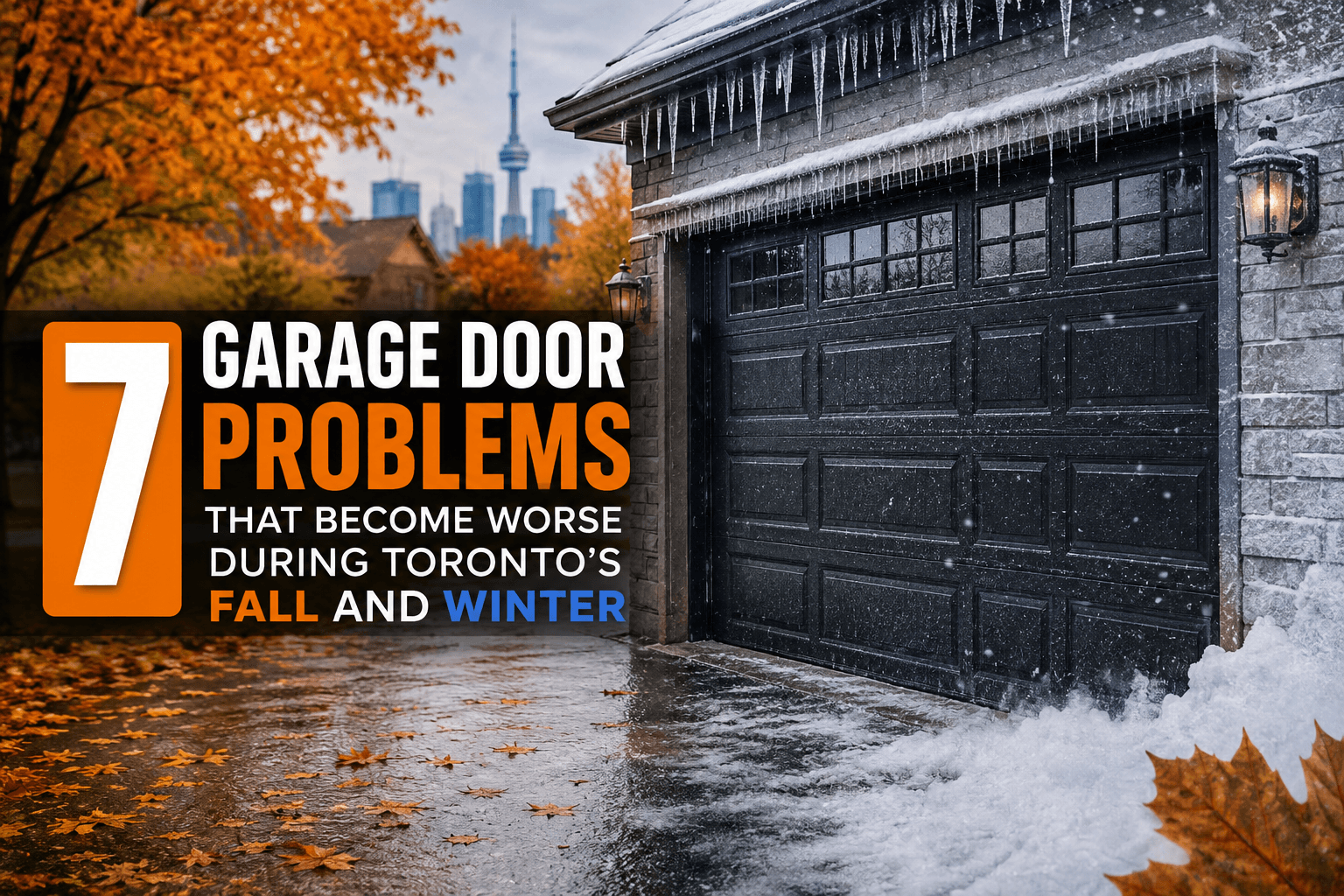
As temperatures drop across the Greater Toronto Area, your garage door works harder than almost any other part of your home. Freezing temperatures, road salt, ice buildup, and snow accumulation put extra strain on moving parts that were fine all summer long. If you’ve noticed your garage door acting up as the weather turns, you’re not imagining things — garage door winter problems are one of the most common service calls we get every year.
In this guide, we’ll break down the garage door issues that get worse in cold weather, why they happen, and what you can do about them before a small problem turns into an expensive repair — or leaves you locked out in the cold.
Why Toronto Winters Are So Hard on Garage Doors
Toronto’s climate swings from humid summers to freezing winters, and that temperature range causes metal to contract, lubricants to thicken, and rubber components to harden. Add in snow, slush, and road salt tracked into the garage, and you have the perfect conditions for accelerated wear. This is why garage door problems in winter tend to spike between November and February, and why proactive garage door winter maintenance matters so much in this region.
1. Frozen Weather Seals and Door Bottoms
The rubber seal along the bottom of your garage door — and sometimes the side seals — can freeze directly to the concrete floor overnight, especially after snow melts and refreezes. When this happens, forcing the door open can tear the seal or strain the opener motor.
Signs Your Seals Are Frozen
- The door struggles or jerks when opening
- You notice ice or frost along the bottom edge of the door
- Cold air or drafts are entering the garage even when the door is closed
- The rubber seal looks cracked, brittle, or torn
What You Can Do
- Gently break the ice seal with a plastic scraper — never force the opener
- Apply a silicone-based (not petroleum-based) lubricant to the seal
- Clear snow and slush away from the door track before it refreezes
- Replace cracked or brittle weatherstripping before winter fully sets in
2. Stiff, Sticking, or Noisy Rollers
Metal and nylon rollers both react to cold temperatures, but metal rollers are especially prone to stiffening and squeaking once the mercury drops. Grease and lubricant thicken in the cold, which slows the rollers down and puts extra load on the opener and cables.
Common Roller Symptoms in Winter
- Loud grinding or squeaking as the door moves
- Uneven or jerky movement along the track
- The door appears to hesitate at certain points
- Visible rust or dried-out grease on the roller stems
Winter Maintenance Tip
Lubricate rollers, hinges, and tracks with a lithium- or silicone-based lubricant rated for cold weather — at least twice during the winter season. Avoid WD-40 as a long-term lubricant, since it can attract dust and dry out quickly in cold conditions.
3. Broken or Weakened Springs
Garage door springs are under constant tension, and metal contracts in cold weather — making springs more brittle and more likely to snap, especially older ones that are already near the end of their lifespan. A broken spring is one of the most common reasons for emergency garage door repair Toronto homeowners call in during winter.
Warning Signs of a Failing Spring
- A loud bang from the garage (often the sound of the spring snapping)
- The door feels unusually heavy when lifted manually
- The door opens only a few inches before stopping
- Visible gaps or separation in the spring coil
Safety note: Garage door springs are under extreme tension and should never be repaired or replaced by anyone other than a trained technician. Attempting a DIY fix can cause serious injury.
4. Cable Problems and Fraying
Cables work alongside the springs to lift and lower your door safely. Cold weather makes cables more prone to freezing, fraying, or slipping off their drums — particularly if there’s already rust or wear from road salt and moisture exposure.
Signs of Cable Trouble
- The door hangs unevenly or looks crooked when opening
- Visible fraying or rust on the cable itself
- A snapping or popping sound during operation
- The door won’t stay in the open position
Because a broken cable can cause the door to fall unexpectedly, this is another repair best left to professionals with the right tools and safety equipment.
5. Sensor Issues Caused by Cold and Moisture
Your garage door’s safety sensors (photo-eye sensors) are sensitive to alignment, dirt, and moisture — all of which are more common in winter. Condensation, frost, and even sunlight glare off snow can interfere with the sensor signal.
Common Winter Sensor Problems
- The door reverses immediately after starting to close
- The door won’t close at all, even with a clear path
- Blinking lights on the opener unit indicating a sensor fault
- Frost or condensation visibly building up on the sensor lenses
Quick Fixes to Try
- Wipe both sensor lenses clean with a dry cloth
- Check that both sensors are aligned and facing each other directly
- Clear away any snow or ice blocking the sensor’s line of sight
- Confirm the wiring hasn’t come loose from cold-weather contraction
6. Garage Door Opener Malfunctions
Garage door openers rely on motors, gears, and electronics that can all be affected by cold temperatures. Lubricant inside the motor unit thickens, circuit boards can be more sensitive to humidity and temperature swings, and battery-powered remotes lose power faster in the cold.
Winter-Related Opener Issues
- The opener runs but the door doesn’t move
- Remote controls or keypads become unresponsive
- The motor strains or makes a humming noise without lifting the door
- The opener shuts off mid-cycle to protect the motor from overload
If your opener is straining, it’s often a symptom of a different underlying issue — like stiff rollers or a weakened spring — rather than a problem with the opener itself. A professional inspection can pinpoint the actual cause.
7. General Weather-Related Wear and Tear
Beyond specific components, Toronto’s fall and winter conditions accelerate general wear across the entire garage door system:
- Road salt corrosion: Salt tracked in from vehicles speeds up rust on tracks, hinges, and hardware
- Wood panel swelling or warping: Moisture from snow and slush can affect wooden garage doors
- Panel dents from ice and snow: Falling ice or heavy, wet snow can dent thinner door panels
- Track misalignment: Freeze-thaw cycles can shift the ground slightly, throwing tracks out of alignment
Garage Door Winter Maintenance Checklist
A little preventive care goes a long way. Before winter fully sets in, run through this checklist:
- Inspect and lubricate rollers, hinges, and tracks
- Check weatherstripping and seals for cracks or gaps
- Test the auto-reverse safety feature
- Clean and align photo-eye sensors
- Inspect springs and cables for visible wear or rust
- Tighten loose bolts, brackets, and hardware
- Replace remote or keypad batteries
- Clear snow and ice buildup regularly around the door
When to Call a Professional
Some issues are safe to handle yourself — clearing ice, lubricating rollers, or wiping down sensors. But if you’re dealing with a broken spring, frayed cable, misaligned track, or an opener that’s straining, it’s time to call in a professional. Attempting these repairs yourself can lead to injury or further damage to the door system.
If you’re experiencing any of the problems above, our team provides reliable garage door repair Toronto homeowners can count on, even in the middle of winter. We diagnose the root cause — not just the symptom — so your door works safely and smoothly all season long.
Frequently Asked Questions
Why does my garage door struggle to open in cold weather?
Cold temperatures thicken lubricant, stiffen metal rollers, and can freeze weather seals to the floor. This added resistance forces the opener and springs to work harder, which is why doors often struggle or move unevenly in winter.
Can I lubricate my garage door myself in winter?
Yes. Use a silicone- or lithium-based lubricant on rollers, hinges, and tracks. Avoid petroleum-based products like WD-40 for long-term lubrication, as they can attract grit and dry out quickly in cold weather.
How do I know if my garage door spring is about to break?
Watch for a door that feels heavier than usual, opens only partway, or moves unevenly. A loud bang from the garage is often the sound of a spring already breaking. If you notice any of these signs, avoid using the door and call a technician.
Why does my garage door reverse before it closes?
This is usually caused by dirty, misaligned, or frost-covered safety sensors. Clean the sensor lenses and check their alignment first; if the problem continues, the sensor wiring or opener settings may need professional attention.
How often should I do garage door winter maintenance?
A thorough inspection and lubrication at the start of fall, followed by a check-up mid-winter, is usually enough for most homes. Homes with older doors or heavy daily use may benefit from more frequent checks.
Is it normal for my garage door to be noisier in winter?
Some extra noise is common due to stiffened lubricant and cold metal parts. However, grinding, popping, or banging sounds are not normal and usually indicate a roller, spring, or cable issue that needs attention.
What should I do if my garage door won’t open at all in freezing weather?
First, check if the bottom seal is frozen to the ground and gently break the ice with a plastic scraper. If the door still won’t move, avoid forcing the opener — this could indicate a broken spring or cable, which requires a professional repair.
Final Thoughts
Toronto’s fall and winter weather doesn’t just make daily life colder — it puts real strain on your garage door’s springs, cables, rollers, sensors, and opener. Staying ahead of garage door winter problems with regular maintenance can save you from a mid-winter breakdown, and catching small issues early is always safer and cheaper than an emergency repair.
If your garage door is showing any of the warning signs above, don’t wait for it to get worse. Contact our team for a professional inspection and keep your garage door running safely all winter long.