



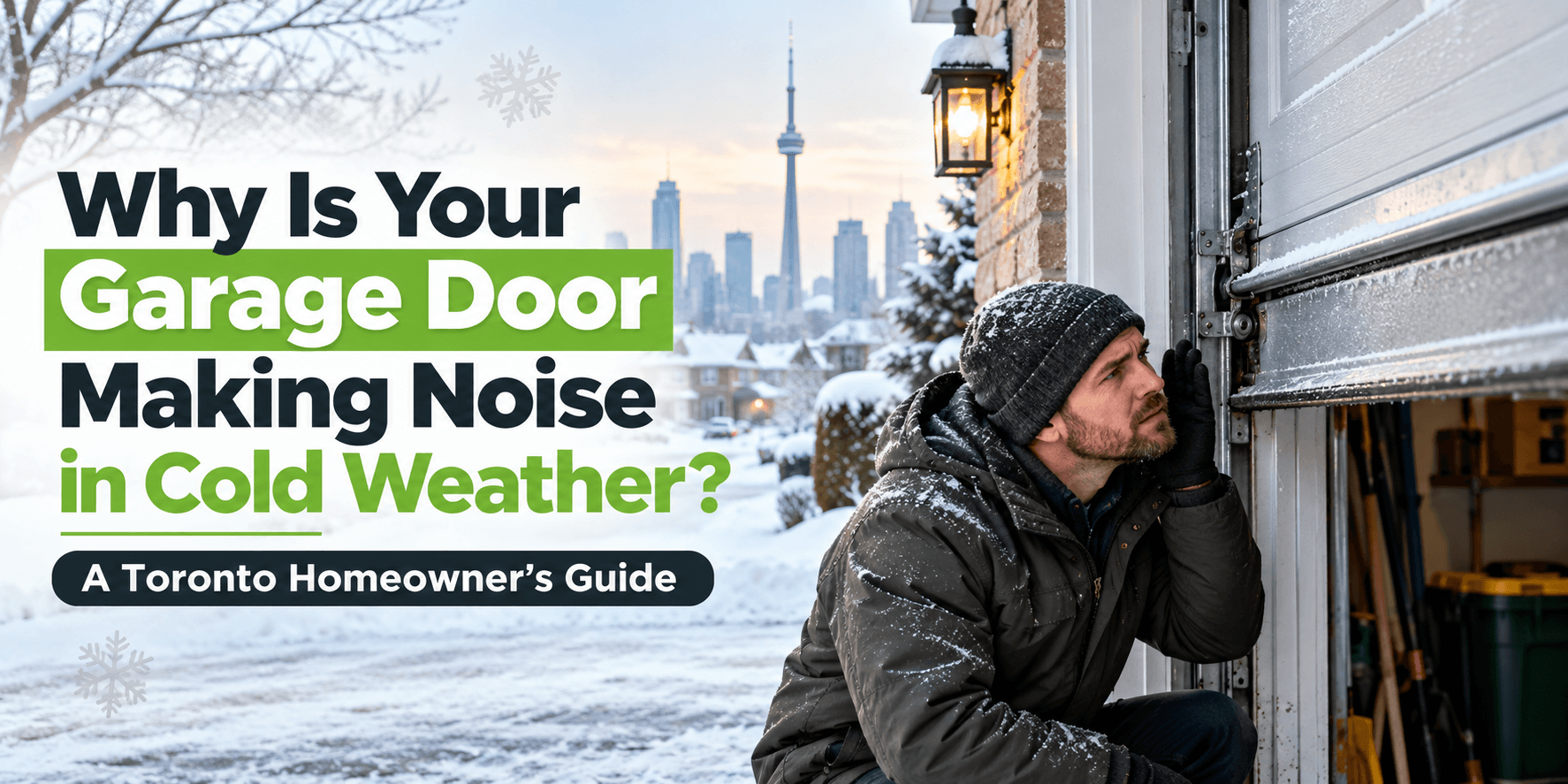
The first real cold snap of a Toronto winter has a way of waking up every noise your garage door was keeping to itself. A door that opened quietly in October suddenly groans, squeals, or bangs its way up the tracks in January. It is one of the most common things homeowners notice when temperatures drop, and while some of it is harmless, certain sounds are your door asking for help before a small issue becomes an expensive one.
This guide explains why cold weather makes garage doors noisier, what the different sounds usually mean, what you can safely do yourself, and when it is time to call for professional garage door repair in Toronto. Knowing the difference can save you from a door that fails on the coldest morning of the year.
Why Cold Weather Makes Garage Doors Noisier
Your garage door is a system of metal parts working together, and metal reacts to the cold. When the temperature drops, a few things happen at once:
- Metal contracts: springs, tracks, rollers, and hinges shrink slightly in the cold, which tightens tolerances and makes parts rub and grind where they used to glide.
- Lubricant thickens: grease that stays smooth in summer turns stiff and sticky in winter, so moving parts drag instead of rolling freely.
- Components stiffen: rollers, bearings, and the opener itself all work harder against cold, rigid parts, which adds strain and noise.
- Moisture freezes: condensation and melted snow can freeze on tracks, rollers, and along the bottom of the door, creating resistance and new sounds.
A little extra noise on a frigid morning is normal. The key is learning which sounds are routine and which ones point to a part that is wearing out or about to fail. These are among the garage door problems that get worse during Toronto’s fall and winter, so it pays to pay attention early.
Common Cold-Weather Noises and What They Mean
Different sounds point to different causes. Here is how to read what your door is telling you:
Grinding or scraping
Often a sign of worn rollers, dry bearings, or a track knocked out of alignment. In winter, stiff grease and contracted metal make grinding more noticeable, but it should not be ignored.
Squealing or screeching
Usually points to parts that need lubrication, such as rollers, hinges, and the spring. A high-pitched squeal on cold mornings is frequently the first thing lubrication will quiet.
Banging or popping
Can indicate stiff or binding sections, panels flexing in the cold, or, more seriously, a problem developing with the springs. A loud bang followed by a door that won’t open can mean a broken spring and should be treated as urgent.
Rattling or vibrating
Loose hardware, nuts, and bolts shaken free over time will rattle more as parts contract. It is often minor, but loose hardware is worth tightening before it leads to bigger problems.
A straining or grinding opener
If the opener motor sounds like it is working much harder than usual, the door may be stiff, off balance, or dragging. Forcing it in the cold can shorten the opener’s life, so have the cause checked.
Other Cold-Weather Garage Door Problems
Noise is not the only way winter stresses a garage door. Watch for these common cold-weather issues too:
- The door won’t close: if your garage door won’t close in cold weather, the safety sensors may be misaligned or blocked by frost and snow, or the opener’s settings may need adjustment for the stiffer movement. Never disable a safety sensor to force the door shut.
- The door freezes to the ground: water can freeze along the bottom seal, bonding the door to the concrete. Forcing it open can tear the seal or strain the opener.
- A worn weather seal: a cracked or brittle bottom seal lets in cold air, snow, and moisture. Garage door weather seal replacement keeps the cold out and helps prevent freezing and drafts.
- Slow or jerky operation: stiff rollers and thick grease can make the door move unevenly until everything is cleaned and lubricated.
What You Can Safely Do Yourself
A few simple maintenance steps handle many minor winter noises. These are safe for most homeowners:
- Lubricate moving parts with a garage-door-rated lubricant on the rollers, hinges, and springs. Avoid heavy grease that stiffens in the cold, and follow the manufacturer’s guidance.
- Clear ice and snow from the tracks and along the bottom of the door, and keep the area in front of the door clear.
- Keep the safety sensors clean and free of frost, cobwebs, and snow so the door closes properly.
- Tighten visible hardware such as loose bolts on brackets and hinges, using hand tools only.
Important safety note: Never try to adjust, repair, or replace garage door springs or cables yourself. They are under extreme tension and can cause serious injury. Do not place your hands near moving parts, keep children and pets well away from the door, disconnect the opener’s power before any hands-on work, and leave all spring, cable, and electrical repairs to a trained professional.
When to Call for Garage Door Repair in Toronto
Some problems need a professional, and trying to push through them in the cold usually makes things worse. Call for help if you notice:
- A loud bang and a door that won’t open, which often means a broken garage door spring
- A frayed, loose, or snapped cable, or a door hanging unevenly
- A door that has come off its track or jams partway
- An opener that strains, reverses, or stops working
- A door that still won’t close after you have cleared and cleaned the sensors
Persistent noise is also worth a professional look. If the sounds continue after basic maintenance, they may be early signs your garage door is failing. For a door that has stopped working entirely on a freezing day, emergency garage door repair gets you back to normal quickly.
Preventing Cold-Weather Garage Door Problems
The best way to avoid a winter breakdown is to prepare before the deep cold arrives. A little upkeep goes a long way:
- Lubricate and clean moving parts going into the colder months
- Replace a cracked or worn bottom weather seal before snow season
- Address small noises and minor issues early, while they are still cheap to fix
- Book a professional tune-up so worn parts are caught before they fail
A professional seasonal check-up is one of the simplest ways to keep your door running quietly and reliably through a Toronto winter.
Why Choose Toronto Garage Door Guys
Toronto Garage Door Guys provides professional garage door repair services across Toronto, including Scarborough, Etobicoke, and North York. From noisy doors and worn rollers to spring, cable, and opener problems, the team handles the repairs that cold weather tends to bring, with emergency service when you need it most.
If your door is making noises you don’t trust, or it has stopped working in the cold, professional garage door repair in Toronto will diagnose the real cause and fix it safely, rather than leaving you to guess.
Noisy or Stuck Garage Door This Winter?
Don’t wait for the coldest morning of the year. Toronto Garage Door Guys repairs noisy, stiff, and stuck garage doors across Toronto, Scarborough, Etobicoke, and North York.
150 Duncan Mill Road, Unit 2, Toronto, ON M3B 3M4
Frequently Asked Questions
Is it normal for a garage door to be louder in winter?
Some extra noise is normal, because metal contracts and grease stiffens in the cold. However, loud grinding, banging, or a sudden new sound can signal a worn or failing part, so persistent noise is worth checking.
Why won’t my garage door close in cold weather?
The most common causes are safety sensors blocked or misaligned by frost and snow, ice along the bottom of the door, or opener settings that need adjusting for stiffer movement. Clean the sensors first; if it still won’t close, call a professional and never disable the sensors.
Can I lubricate my garage door myself?
Yes. Applying a garage-door-rated lubricant to the rollers, hinges, and springs is a safe homeowner task and often quiets winter squeaks. Avoid thick grease that stiffens in the cold, and never attempt to adjust or repair the springs or cables themselves.
Should I replace my garage door weather seal before winter?
If the bottom seal is cracked, brittle, or letting in drafts and snow, replacing it before the cold sets in is a smart move. A good seal keeps out cold air and moisture and helps prevent the door from freezing to the ground.
When should I call for professional garage door repair in Toronto?
Call a professional for a broken spring, a frayed or snapped cable, a door off its track, an opener that strains or fails, or a door that won’t close after cleaning the sensors. These issues involve high-tension or electrical parts that are not safe to repair yourself.